

Choosing Sustainability Over Uncertainty
A reflection on global uncertainty, resilience, and choosing sustainability for rural students

Dear Sahwira,
As 2025 comes to an end, I share this not as a victory but as an invitation to rethink old models with courage and an open mind.
Some years pass quietly, and then some years ask everything of us.
For our foundation, and for many humanitarian organizations across Africa, 2025 will be a landmark. A year that required us to pause, and to look unflinchingly at truths we had long known but hoped we might not have to face so soon.
Economic instability tightened its grip. Global conflicts deepened and multiplied. External funding, once steady, once dependable, began to retreat. Not because compassion had vanished, but because the world’s attention had shifted, fractured by crises competing for urgency.
The suspension of grants by the U.S. government, coupled with the ongoing wars in Gaza, Ukraine, and elsewhere, reshaped the landscape of international aid almost overnight. Nations pulled inward. Foreign aid budgets were cut. Humanitarian funding was redirected to emergencies closer to the headlines.
For our foundation, this was more than a policy shift by a U.S. administration to focus on domestic issues rather than continue to fund international projects; it was a profound personal challenge.
For years, the generosity of friends and partners, many of whom are abroad, has sustained scholarships for rural students pursuing higher education across Zimbabwe. Their support changed lives. It kept young people in classrooms when poverty threatened to pull them away. It gave families hope.
But as the world reeled, I watched many of those same friends make difficult, compassionate choices. They redirected their funding toward women and children affected by the Israel-Gaza war, the Ukraine conflict, and other devastating wars and crises that have left countless innocent children displaced, traumatized, and grieving.
I understood. I honored their choices.
And still, the absence was felt.
At the same time, another door quietly began to close.
As if these challenges were not enough, in 2025, new executive orders and federal actions in the United States severely restricted Diversity, Equity, and Inclusion (DEI) programs. For many speakers of color, these initiatives had provided not only platforms, but pathways, ways to share lived wisdom, to advocate, to be seen and heard.
I began receiving emails and phone calls canceling or postponing speaking engagements. Though my speaking had declined during COVID-19, I soon began rebuilding my platform and managed to maintain at least two engagements per month.
With the restriction on DEI, the loss of my speaking platform not only hurt me personally but also our foundation.
Not only because speaking had been my livelihood, but because it had been one of the most important ways I cultivated relationships, built community, and invited new supporters into the work of our foundation. It was how stories traveled. How trust grew. How scholarships were funded.
When that platform faltered, so did a pillar of our sustainability.
My reality unraveled quietly, but completely.
I found myself asking questions I could no longer avoid.
What does it mean to build an education system that depends entirely on external aid?
What happens to our students when global priorities change?
What happens when I am no longer able to speak, to travel, to fundraise?
I am an elderly woman in my mid-sixties, aware that life can be unpredictable. I hope, deeply, to live a long, healthy life, possibly reaching 100 years. I also understand the fragility of our time. I imagine myself reaching one hundred. I know that no movement, no foundation, should rest solely on the strength or presence of one person.
Even if my speaking platform were restored, I knew in my bones: this was not a sustainable future.
The message from the donor community was unequivocal: this reality is harsh and cannot be ignored.
To secure our foundation’s future and guarantee tuition for the students we support through donor-funded scholarships, I, as a founder, must reevaluate and fully understand what these global shifts mean for the survival of their dreams and the foundation itself.
What made this reckoning unbearable was knowing what was at stake. Hundreds of students, bright, determined, already enrolled in colleges and universities across the country, depended on our ability to secure tuition, accommodation, and living expenses.
Their dreams were not abstract. They had names. Faces. Futures unfolding in real time.
To fail them was unthinkable.
And yet, building a forward-looking strategy in the midst of scarcity, exhaustion, and uncertainty felt almost impossible.
Almost.
It was in this firelit moment that a different vision emerged, one born not of abundance, but of necessity. A vision for a self-sustaining revenue model, one that could break the cycle of dependency and ensure that a rural child’s education would never again hinge on the unpredictability of donor cycles.
Even if it meant risking my retirement savings, I was willing.
I was confident that the income generated locally, with dignity and intention, could fund scholarships for rural students pursuing higher education across Zimbabwe. That we could keep our students in school not through charity alone, but through structure, courage, and foresight.
I surrounded myself with a new kind of leadership, Sahwiras who thought strategically, spoke honestly, and believed when evidence was thin. They sat with me as I wrestled with fear and possibility. They helped me imagine what had never been done in quite this way.
There were no guarantees. Only conviction.
After months of planning, problem-solving, and collective courage, a dream took shape.
I had long carried a quiet desire to establish a private school, one that could sustain the foundation and model what quality, values-driven education could look like. I had postponed it for years, overwhelmed by the thought of financing, land, curriculum, and risk.
But some visions wait patiently until the moment demands them. I knew one day the chicken would come home to roost.
With the support of three friends who saw clearly and gave generously, and with my own savings, I began. Negotiations with builders, carpenters, and educators.
Brick by brick, I watched the school rise at my homestead in Harare.
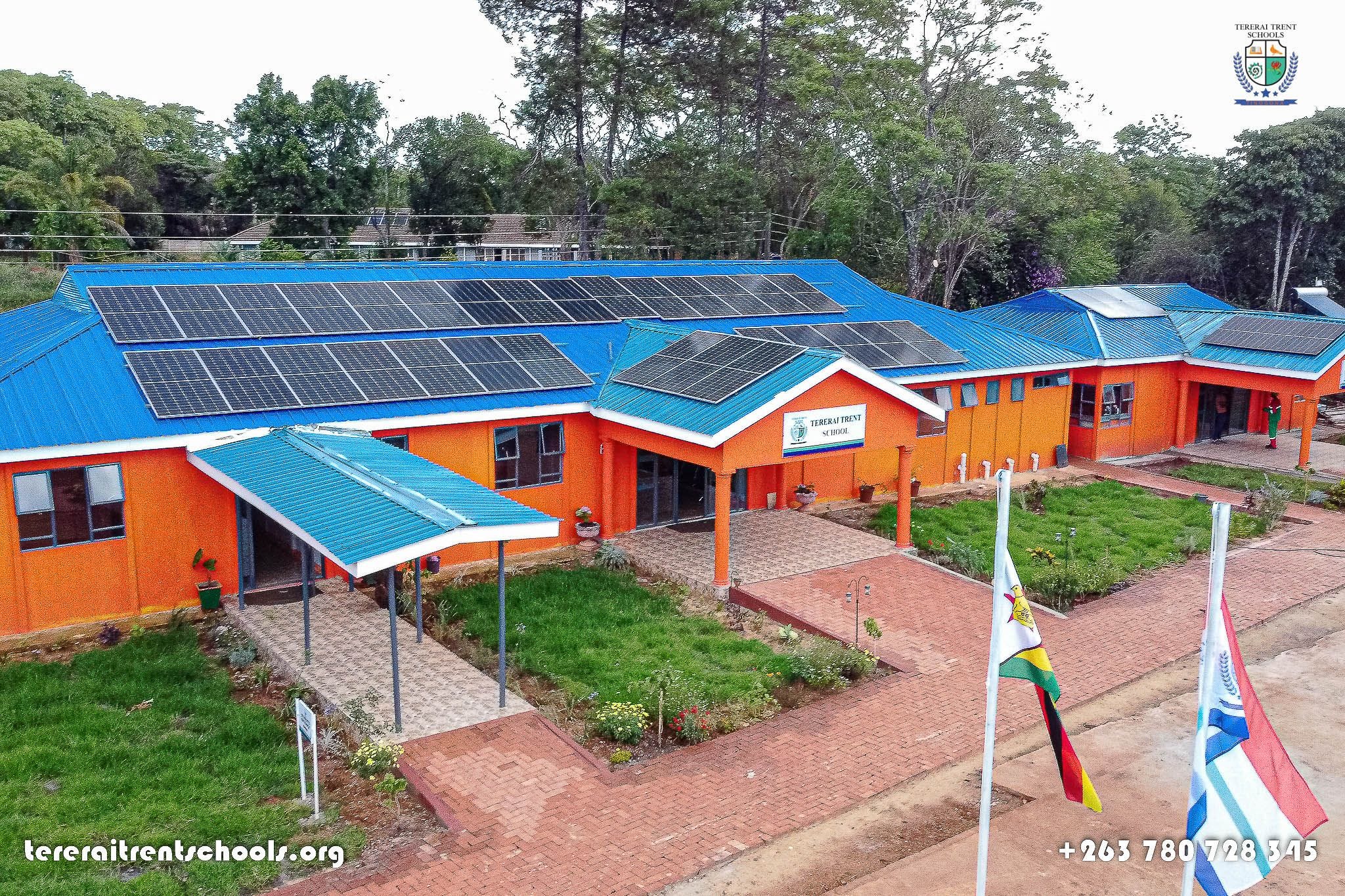
In the images below, and in the short video that follows, you will see what I see now: walls standing. Classrooms waiting. A campus ready to receive its first students.
Today, I can finally say these words with confidence: we are done with construction.
This is the first of what I hope will be many such schools, spaces designed so we never again rely solely on external aid, never allow powerful systems to silence our healing, and never let age quiet our dreams or our responsibility to right old wrongs.
On January 12, 2026, the school will open its doors to students from Zimbabwe and beyond. Its purpose is clear: the income it generates will fund scholarships for rural students pursuing university and higher education. No student will be expelled for inability to pay. Even if external aid disappears, their education will not.
This school is more than a building. It is a promise.
A community-driven, giving-back model rooted in dignity, freedom, excellence, and global responsibility. A way of ensuring that children shaped by poverty are not defined by it.
A commitment to walk with them, not briefly, but sustainably, toward a future of their own making.
As this year draws to a close, I hold both grief and hope with equal tenderness.
I wish you warmth in these final days of 2025.
May you find peace in the remaining days of 2025 and carry that hope and inspiration into 2026, facing the future with courage and positivity.